Nicheverse#
Every cell and niche mapped to an interpretable codebook.
- samples
- datasets
- cells mapped
- tissues
- platforms

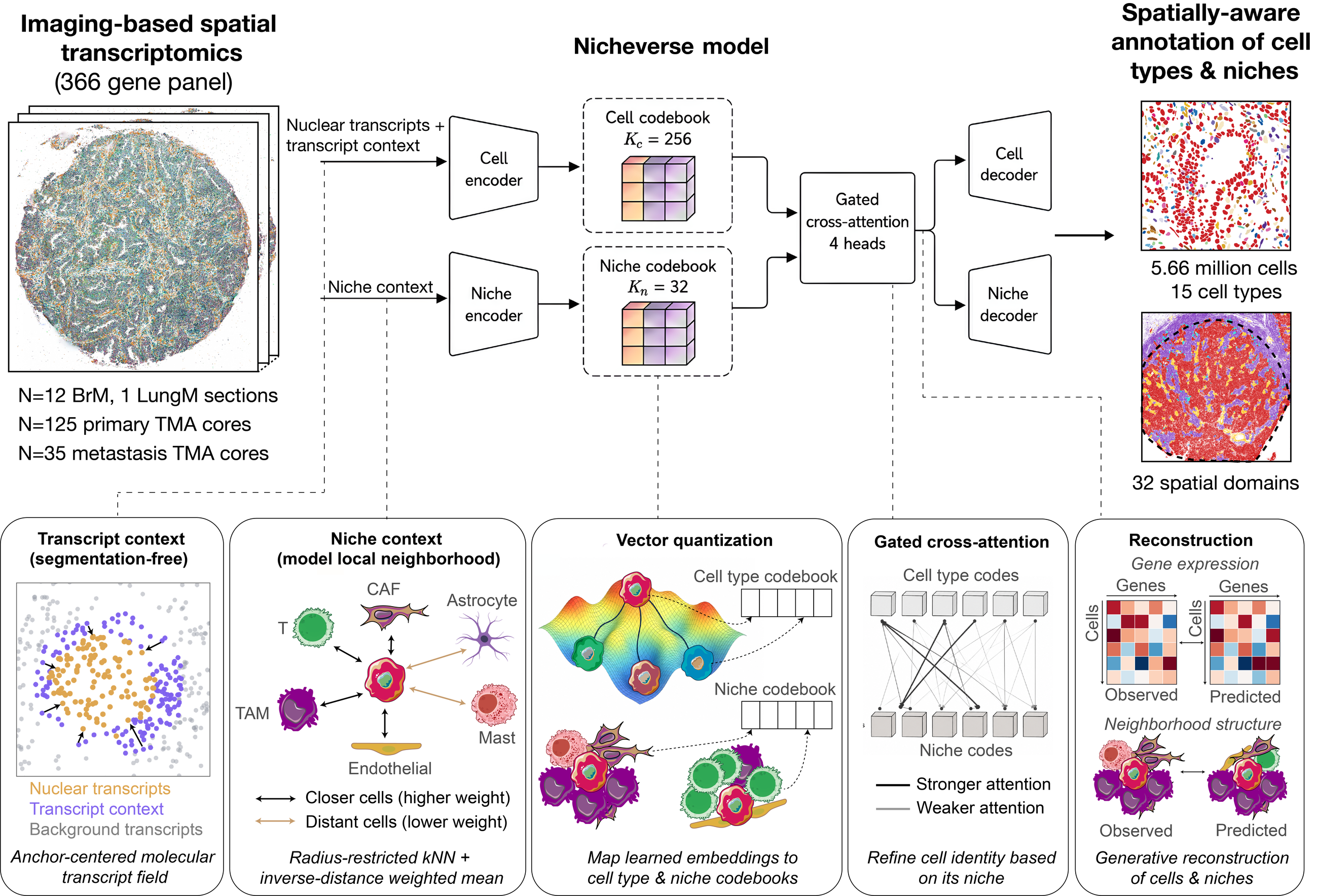
A discrete code for every cell and niche.
Each cell is assigned to one entry of a learned cell state codebook, and each neighborhood to one entry of a learned niche codebook. The two are coupled by cross attention, so a cell's identity is always read in the context of the tissue around it. The same discrete vocabulary transfers, unchanged, from one cohort and platform to the next.
Two encoders, two codebooks, one gated bridge.
A cell encoder summarizes each segmented cell, together with the transcripts detected in and around it, and assigns it to the closest entry of a learned cell state codebook. A niche encoder summarizes the local neighborhood, weighting nearby cells more than distant ones, and assigns it to an entry of a learned niche codebook. A gated cross attention step lets each cell draw on its niche, and two decoders are trained to reconstruct the cell's gene expression and the composition of its neighborhood, using count aware losses. Because both codebooks are discrete and shared across the tissue, every code can be compared across samples.
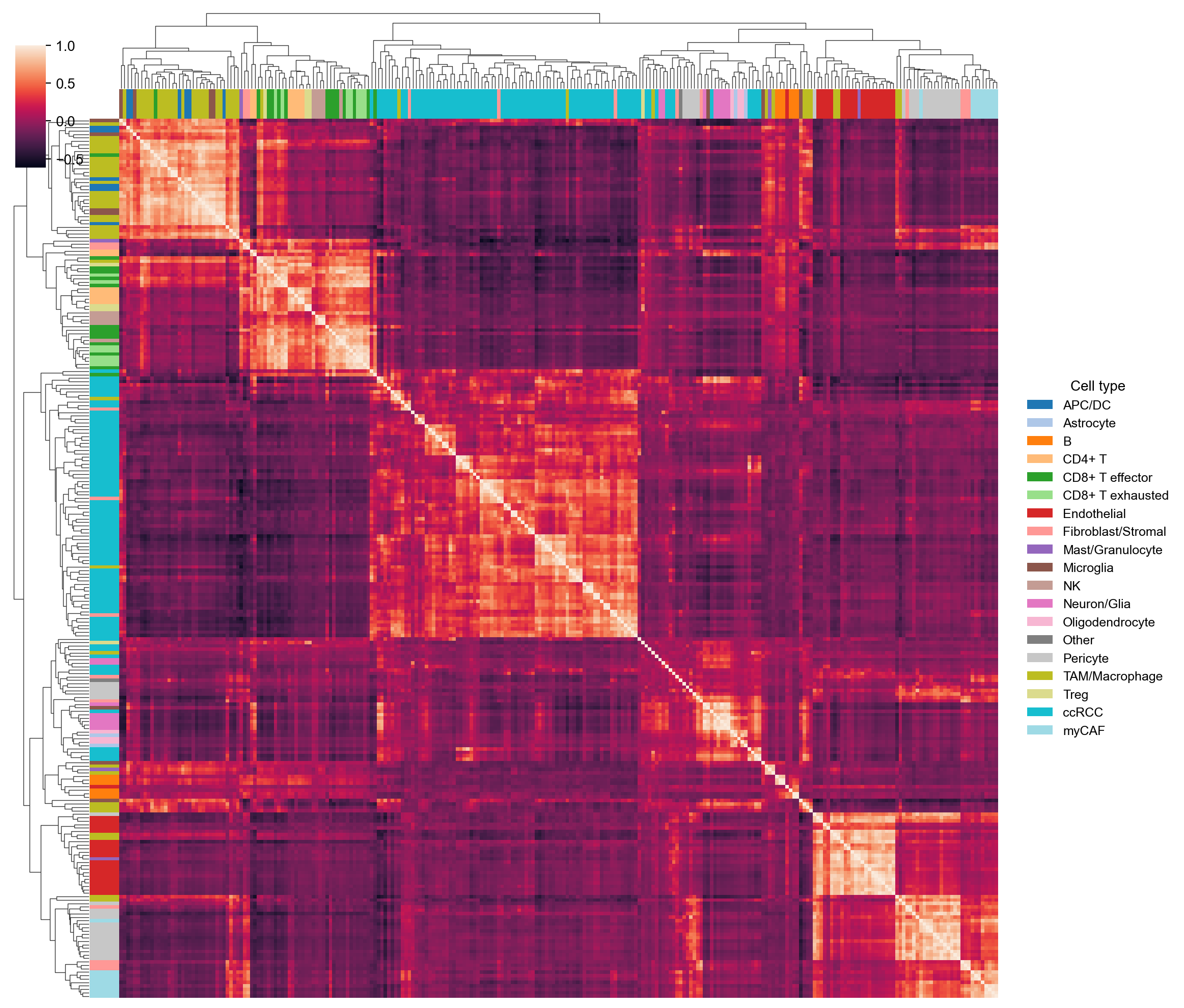
An interpretable vocabulary of cell states.
When the learned code embeddings are clustered by their similarity, they group into coherent lineages without any labels being supplied: epithelial, stromal, endothelial, and immune codes separate on their own. Each code has a consistent expression signature, so it can be annotated once and recognized across samples and tissues.
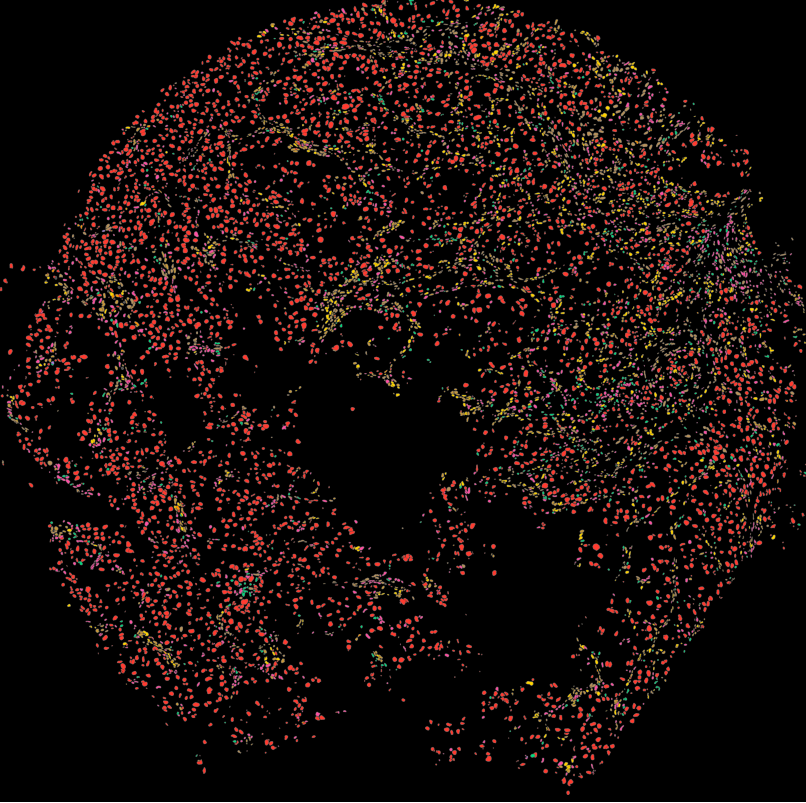
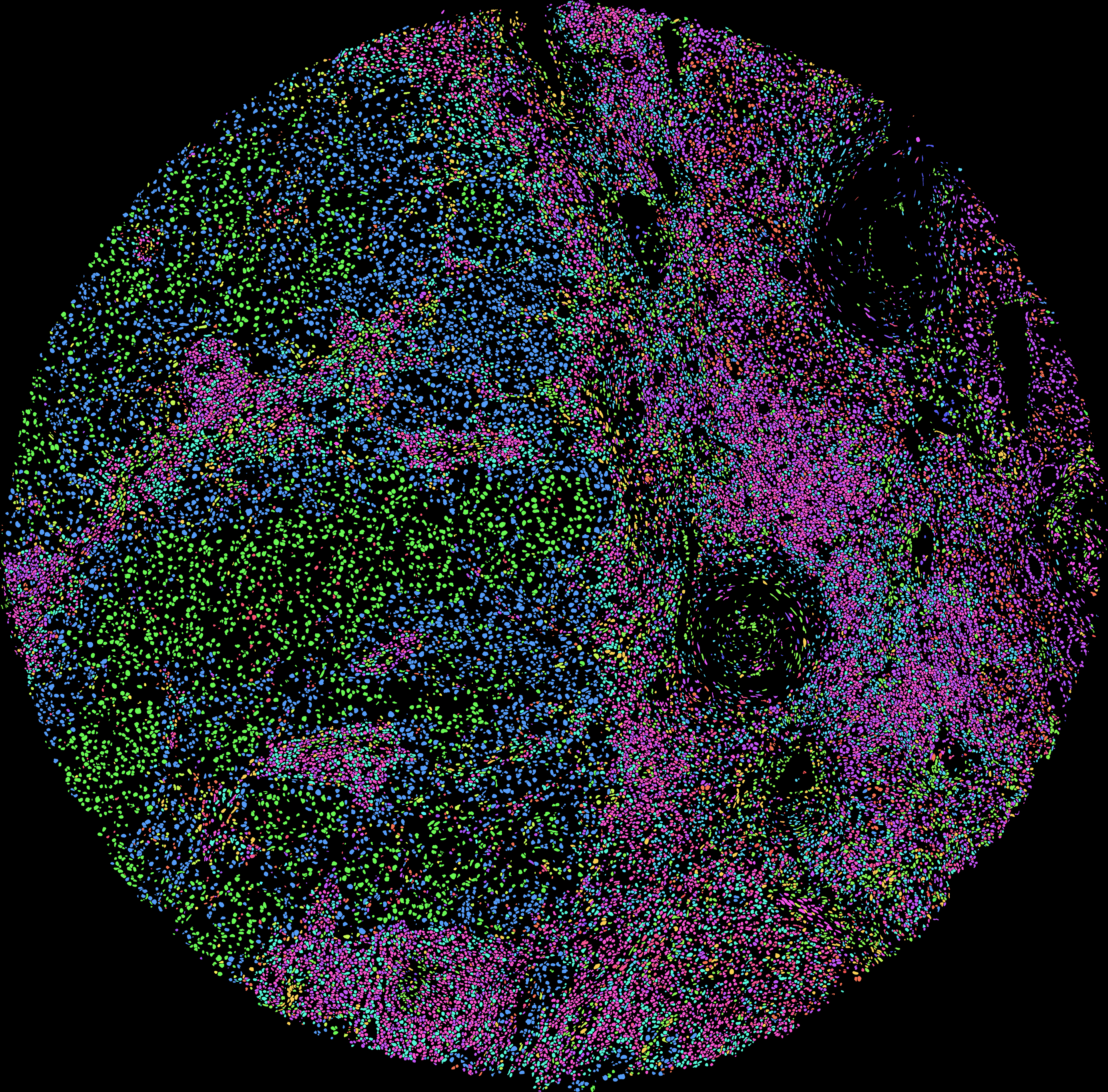
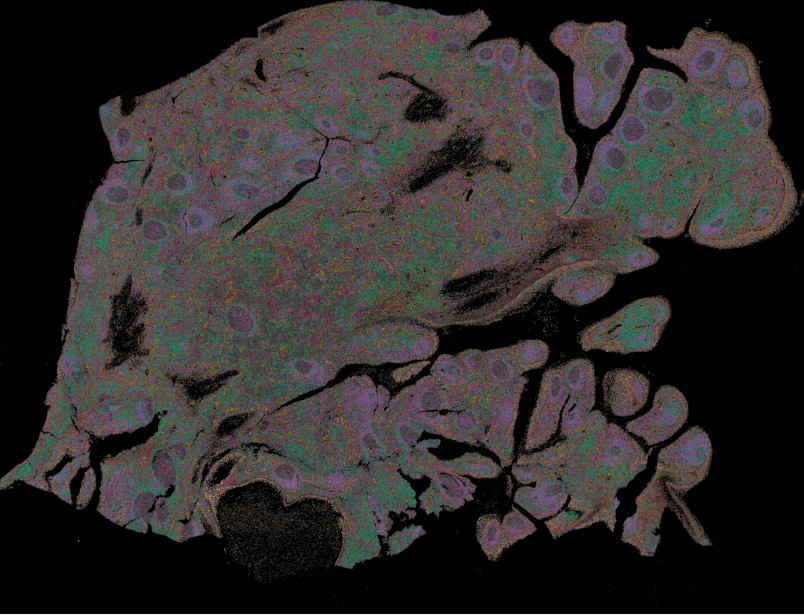
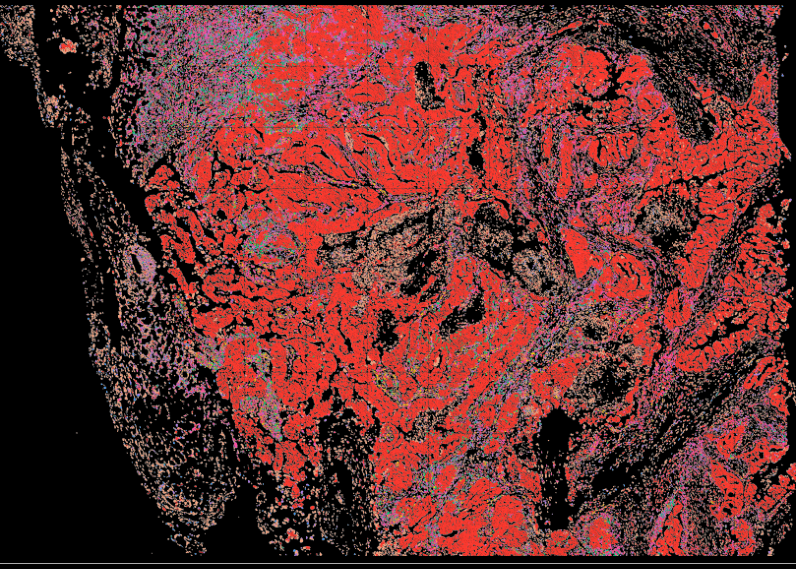
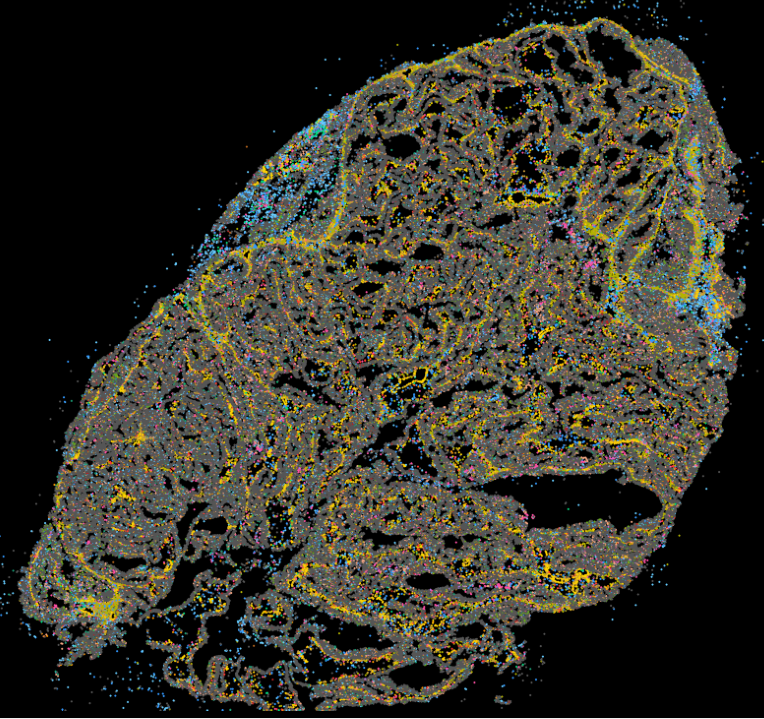
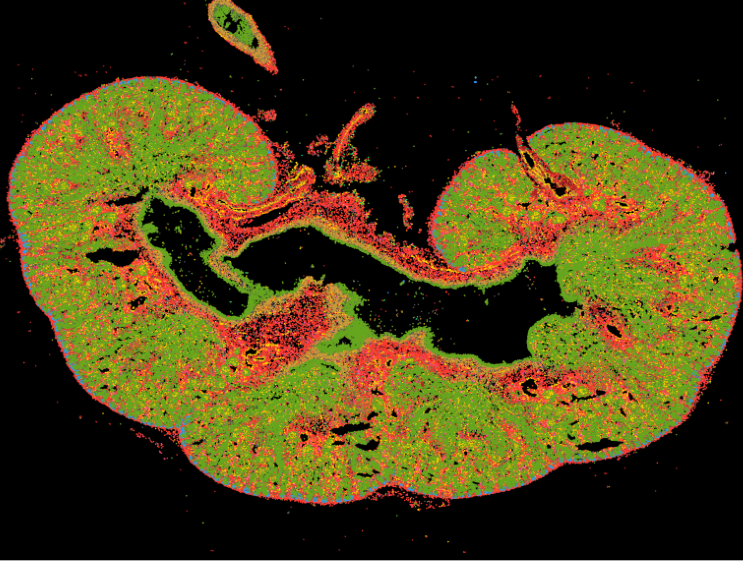
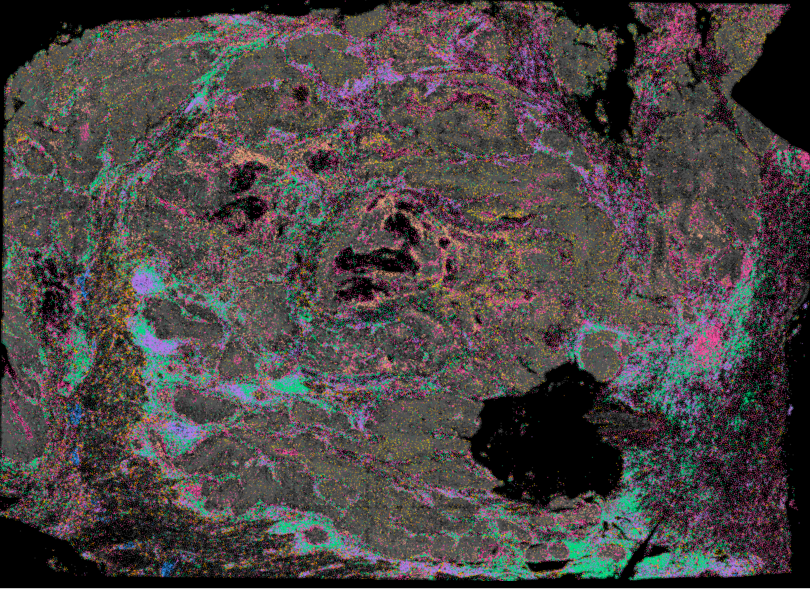
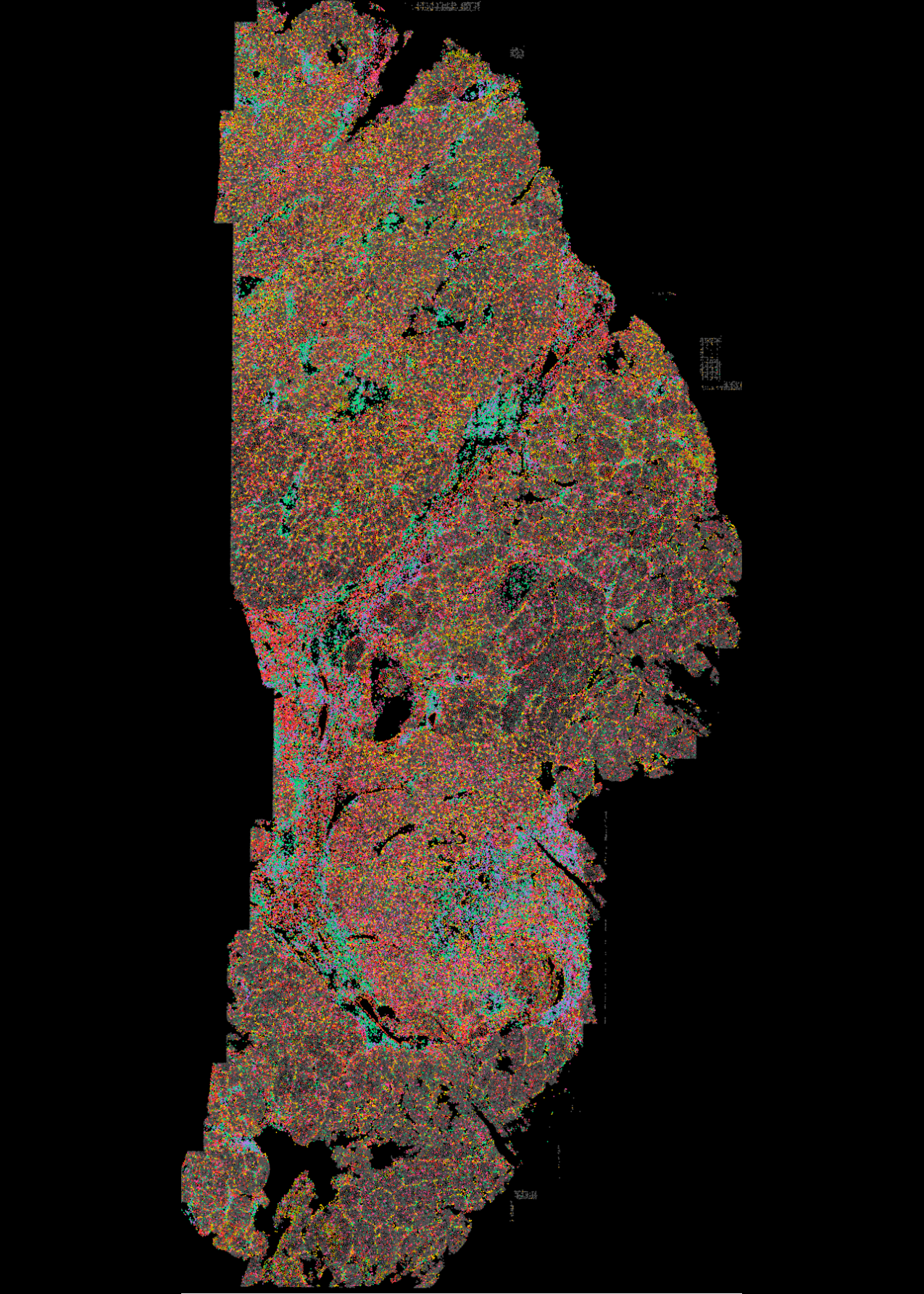
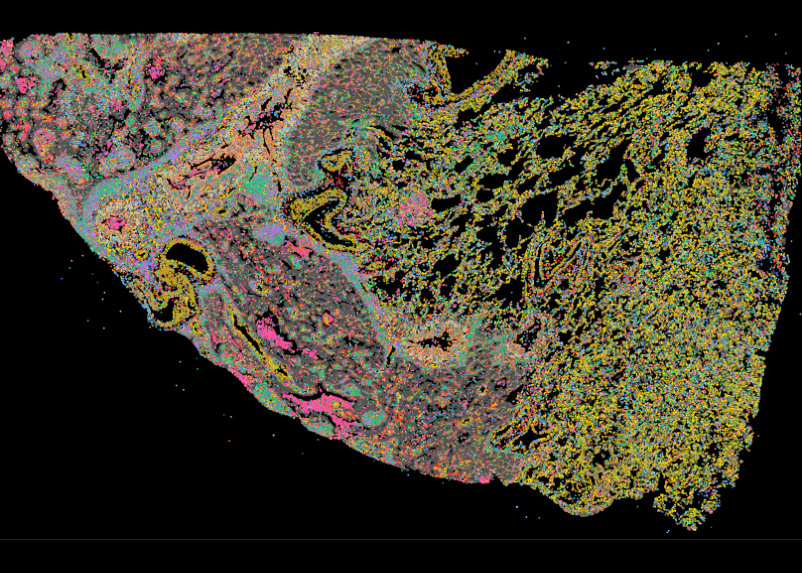
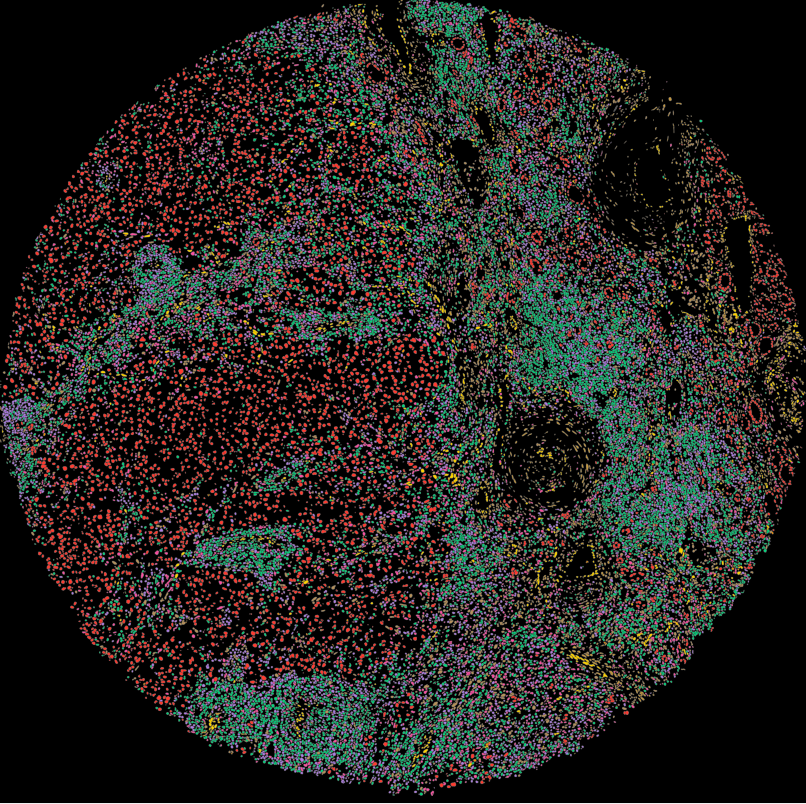
Explore the atlases mapped in the nicheverse
Explore samples from many independent datasets and imaging platforms, including Xenium, CosMx, MERFISH, RAEFISH, seqFISH, STARmap, osmFISH, RIBOmap, EEL FISH, and BARISTAseq. Each cell is drawn as its nucleus and colored by the cell type of the code Nicheverse assigns it, with tumor cells shown in red.
Browse all samplesNicheverse
Neighborhood-Inferred Cell type HiErarchical annotation + VEctor-quantized Representations of Spatial Ecotypes
Paired codebooks for cell states and spatial niches, linked by cross attention, so each cell is interpreted in the context of the tissue around it.
Encoders and quantizers are modular and interchangeable, so the architecture can be adapted to new data types, panel sizes, and experiments without changing the rest of the pipeline.
Neighborhoods are built within each sample, nearby cells are weighted more than distant ones, and several ways of defining spatial neighbors are supported.
Install
pip install nicheverse
Citation
If you use Nicheverse, please cite:
Yarlagadda DVK, Wang Z, Jiang H, Vuong L, López-Sanmiguel A, Yang C-Y, Kotecha RR, Chen Y-B, Hakimi AA, Leslie CS, Massagué J. Developmental reversion underlies resistance to immune checkpoint blockade in kidney cancer. bioRxiv 2026. doi:10.64898/2026.08.05.743137.
Yarlagadda DVK, Massagué J, Leslie C. Discrete Representation Learning for Modeling Imaging-based Spatial Transcriptomics Data. 2023 IEEE/CVF International Conference on Computer Vision Workshops (ICCVW), 2023, pp. 3848-3857. doi:10.1109/ICCVW60793.2023.00416.